Across Cultures
9 October 2026
/
Rupa Lyall
Menopause can arrive in a life where it has never been named. Sleep becomes unsettled. Confidence dips. Your body feels different. Yet the conversations that might help you make sense of it may be missing.
We learn about our health through more than medical appointments. We learn from the people around us, the subjects our families discuss, the language we use and the things we are taught to keep private.
When we talk about menopause, those influences deserve a place in the conversation.
As a British-born Sikh pharmacist, I care about making menopause information accessible across different backgrounds. My own background is one perspective; every woman brings her own experiences, beliefs and priorities.
The same life stage can carry different meanings
For one woman, menopause may bring relief from periods or a welcome sense of freedom. For another, it may raise questions about ageing, fertility, intimacy or identity. Someone else may be focused on getting through the working day after another sleepless night.
Culture includes our upbringing, faith, family expectations and wider surroundings. It also changes across generations. Two women who share an ethnic background may understand menopause very differently.
A useful starting point in care is a simple question: what does this stage of life mean to you?
When silence leaves women unprepared
In a 2026 interview study involving 15 British South Asian women, participants described gaps in menopause knowledge, limited conversations between generations and uncertainty about recognising symptoms. Some also described greater openness in their own generation. [1]
The study offers insight into these women’s experiences, rather than a description of every South Asian woman. All participants spoke English, and the small sample cannot represent the full diversity of these communities.
Silence can leave someone with little preparation for changes that affect everyday life. If the only symptom you have heard about is a hot flush, you might not connect sleep problems, changes in mood or vaginal discomfort with menopause.
Making room for conversation can start gently: sharing reliable information, asking an older relative about her experience, or saying to a friend that something has changed and you would like to understand it.
Menopause has more than one symptom pattern
Hot flushes and night sweats are familiar, but symptoms can also include sleep disturbance, changes in mood or concentration, joint and muscle aches, vaginal dryness and urinary symptoms. Their impact varies considerably. [2]
The NHS notes that Black women are more likely to experience severe hot flushes that continue for longer. This describes a pattern across groups; it cannot predict what an individual woman will experience.
Research findings should help clinicians ask better questions. They should never become a reason to assume that a woman will have particular symptoms, tolerate them better or want a particular treatment.
New or persistent symptoms still need appropriate assessment. Menopause may be contributing, while other conditions also need consideration.
Does menopause happen at the same age for everyone
Natural menopause usually occurs between 45 and 55, although it can happen earlier. NICE advises that some ethnic minority groups may experience it at a younger age. [3,4]
You may see precise average ages quoted for women from different countries. Those figures describe particular populations and studies. They should be interpreted carefully when discussing women living in the UK, whose circumstances may differ.
If your periods change or stop before 45, or you develop symptoms that could suggest menopause, seek advice. Natural menopause before 40 is often referred to as premature ovarian insufficiency and needs specific assessment and support. [4]
Language matters beyond translation
Being able to speak English does not always make it easy to discuss pain during sex, changes in mood or bladder symptoms. Medical terms may be unfamiliar, and the words that feel natural to you may be different from those used in a questionnaire.
UK research involving primary care practitioners has highlighted challenges around awareness and communication in menopause consultations with women from ethnic minority backgrounds. These were practitioners’ perspectives, which should be considered alongside women’s own accounts. [5]
As a clinician, I want to understand what someone means in her own words. Explaining treatment clearly, checking understanding and allowing questions are all part of that conversation.
Translated resources can be helpful, while some women may need a professional interpreter. A relative can offer emotional support, but sensitive medical conversations may benefit from confidential interpreting. You can ask a service what language support is available before booking.
Family and community can help open the conversation
Family relationships, friendships and community spaces can offer comfort and practical support. A conversation with someone you trust may make it easier to ask for help.
Support can be very ordinary: sharing responsibilities after a poor night’s sleep, allowing someone time for an appointment, or listening without immediately offering a solution.
Partners and men in the family can learn about menopause too. Useful questions might be: what has changed for you, and what would help today?
Some women will want a partner, friend or family member involved in their care. Others will prefer privacy. The woman’s wishes should guide this, with space for her to speak for herself.
Differences in treatment access deserve attention
An Oxford-led study published in 2025 examined GP records for around 1.98 million women aged 40 to 60 in England. It found substantial differences in HRT prescribing across ethnic groups and levels of deprivation. [6]
During the study period, 3.9% of Black African women received at least two HRT prescriptions, compared with 22.6% of white women.
These figures describe prescribing, not the treatment needs or preferences of every woman. They cannot tell us why each individual did or did not receive HRT.
Nevertheless, the differences raise questions about access to information, consultations and follow-up. Women should have a fair opportunity to understand the options and receive appropriate care, whether they choose HRT or another approach.
Treatment conversations should make room for your beliefs
You may have concerns about HRT, prefer to explore non-hormonal options or use remedies recommended by family. Those views should be discussed respectfully.
HRT is an effective option for many women, with benefits and risks assessed individually. Vaginal oestrogen can help certain intimate symptoms, and non-hormonal approaches may also be appropriate. [7]
Herbal products vary in their evidence and safety, and some interact with medicines. Tell your clinician what you are using so this can be checked.
You should be able to ask how a treatment works, what benefit to expect, what the risks are and what alternatives exist. You can also ask about ingredients, the source of a product or anything relevant to your beliefs.
Practical ways to make your appointment more useful
You do not need medical language or a complete explanation of what is happening before asking for help. A few notes can make the conversation easier.
- Write down the symptoms affecting you most and how they influence sleep, work, relationships or daily life.
- Note any changes to your periods, plus medicines, supplements and treatments you already use.
- Ask for explanations in plain language, written information or language support if you need it.
- Say whether you would like someone involved in the appointment or prefer to speak privately.
- Ask what the next step is and when your symptoms or treatment should be reviewed.
If bleeding occurs after 12 months without periods, contact your GP, even if it happens only once. If you take HRT, unexpected bleeding should also be discussed with your prescriber. [2]
Making menopause care more accessible
At Your Menopause Care with Rupa, my aim is to offer evidence-based care with time to discuss your symptoms, concerns and choices.
I speak Punjabi, and my website offers translated information to help more women explore menopause care. You are welcome whatever your background or language; please contact the clinic before booking if you need language support, so we can discuss what is available.
I believe menopause education belongs in everyday conversations as well as consultations: among friends, in families, in workplaces and in community spaces.
We can begin by making it easier to ask questions, listening carefully to the answers and giving women information they can use.
Whatever your background, you deserve to understand what is happening to your body and feel comfortable asking for help.
Find out more about personalised online menopause care at Your Menopause Care with Rupa.
This article provides general information and does not replace individual medical advice.
References
- Ellahi SA and colleagues. Menopause experiences among British South Asian women: An exploratory
qualitative study. Women’s Health, 2026. Read source. - NHS. Symptoms of menopause and perimenopause. Read source.
- NICE NG23. Menopause: identification and management. Recommendations. Read source.
- NHS. Early or premature menopause. Read source.
- MacLellan J and colleagues. Perimenopause and/or menopause help-seeking among women from ethnic
minorities: a qualitative study of primary care practitioners’ experiences. British Journal of General
Practice, 2023. Read source. - Hirst JA and colleagues. Inequalities in hormone replacement therapy prescribing in UK primary care:
population based cohort study. BMJ Medicine, 2025. Study summary from the University of Oxford. Read
source. - NHS. Treatment for menopause and perimenopause. Read source.
Sources checked 6 October 2026.
Author
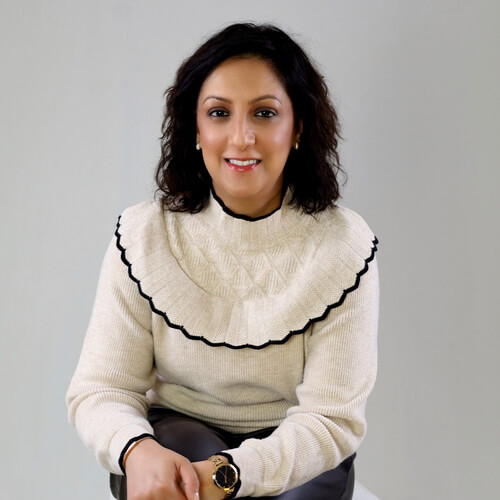
Rupa Lyall
MPharmMenopause Pharmacist & Independent Prescriber
Rupa is a Pharmacist Independent Prescriber with over 22 years of experience across community pharmacy, NHS primary care and online healthcare, with a particular focus on menopause and women’s health.
She holds the British Menopause Society’s Management of Menopause Certificate and Advanced Certificate in Principles and Practice of Menopause Care. She is the founder of Your Menopause Care with Rupa, a CQC-registered UK online menopause clinic.
Her approach combines evidence-based care with clear, practical advice, helping women navigate perimenopause, menopause and postmenopause and make informed choices about their health.
Contact Rupa
Article Categories
Discover More Blog Articles
Begin your
menopause journey
Personalised online care from the comfort of your home at my online menopause clinic. Evening & weekend online appointments available.
 (opens in a new tab)
Book Your Appointment
Secure. Confidential. Convenient.